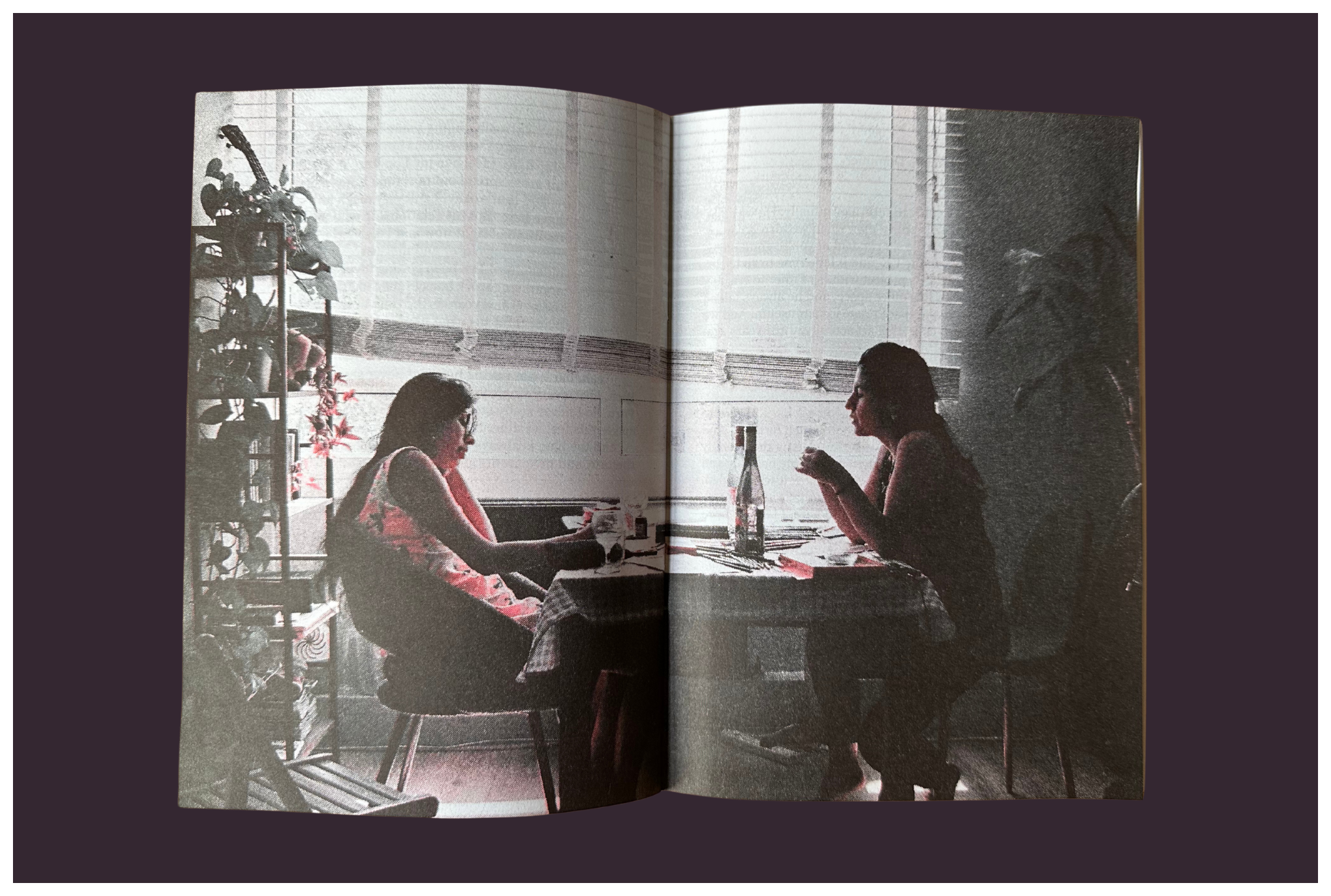
ADDA 3 - PRINT

ADDA 3 - DIGITAL
Featuring Dimitra Meghawaty & Nisal Subasinghe
This issue is special because it’s the first one that I’ve done in Singapore, featuring two Singapore-based artists and cultural organisers. Over the past couple of years, I have been trying to develop a more intentional relationship with the city, after spending the better part of a decade living abroad and believing that I could never grow old there. While there will always be tensions and complexities to navigate, I will file this walk through Little India with Dimitra and Nisal as a key moment in this re-grounding process.
︎
Dimitra Meghawaty is a community organiser with Migrant Mutual Aid, where she leads the casework team. Of Bangladeshi descent, her work explores migration between South Asia and Southeast Asia in its many forms, tracing its histories from penal and indentured labour to the migrant labour systems we see today. Her project, @banglasquaresg, works within the Bangladeshi enclave in Little India, using counter-archiving, gathering, food politics and the exploration of space to examine themes of belonging, memory, migration and place-making. The project asks how migrant communities create, occupy and transform spaces of their own, and how these spaces become sites for connection, care and collective life.
Nisal Subasinghe is a Sri Lankan artist, musician, and DJ based in Asia. Their practice bridges Eastern and Western classical music, experimental radio, club music, and sound culture research. Working across UK Garage, Breakbeat, Bass and Electronic music, Nisal explores how Sri Lankan musical traditions, sub-cultures and what they describe as almost-genres* can be translated into contemporary electronic music contexts. Their work centres on rhythm as a shared language, bringing together vernacular performance practices, folk traditions, and contemporary club music without reducing either to cultural reference or nostalgia. Alongside their studio practice, Nisal engages with sound research and archival work, exploring how everyday sonic cultures in Sri Lanka and South Asia can be documented, preserved, and recontextualised through electronic music. Their work is driven by an interest in rhythm, repetition, circulation, and the ways music travels across communities, technologies, and time.
*almost-genres refers to musical practices that function socially and aesthetically like genres but have rarely been formalised within dominant western genre canons. These forms are often overlooked or absorbed into broad categories such as folk, traditional, pop, or world music, despite their internal coherence and specificity.


︎